The Modernisation of the Mangalsutra
For centuries, the mangalsutra has been one of the most powerful objects in South Asian life. A black-and-gold thread tied around the bride's neck on the wedding day. A symbol of marriage. A piece worn every day, for life.
But the mangalsutra of 2026 doesn't look much like the mangalsutra of 1986. And the women wearing it don't live the same lives as the generations before them.
This is a piece about what's changing, and what isn't.
The mangalsutra, briefly
The mangalsutra is a Hindu wedding necklace traditionally tied by the groom around the bride's neck during the marriage ceremony. The word itself comes from Sanskrit: mangala meaning auspicious, sutra meaning thread. Translated literally: the auspicious thread.
Its design varies enormously across South Asia, where almost every region has its own version of it.
What unites them is the meaning. The mangalsutra is the everyday marker of marriage. Worn against the skin, every day, for life.
How it used to be worn
For previous generations, the mangalsutra came with a script.
It was heavy, often 20 to 40 grams of gold, sometimes more. The chain was long, the pendant ornate, the bead strands doubled or tripled for fullness. It was made for ceremony and for status. The size signalled the wealth of the families joining. The design was chosen by mothers and mothers-in-law, often before the bride had a say.
It was worn with traditional dress. A heavy gold mangalsutra paired beautifully with a saree, with bridal jewellery, with formal occasions. With Western clothing, a t-shirt, a work blazer, jeans, it sat awkwardly. So many women simply stopped wearing it day-to-day. The mangalsutra became a piece for weddings, festivals, and visits to elders. In some cases it lived in a velvet box more than around the neck.
That's not a critique of tradition. It's just what happens when an object is designed for one context and the wearer's life moves into another.
What's actually changing
Three shifts are happening at once.
The first is design. A new generation are reimagining the mangalsutra at fine jewellery proportions. Smaller pendants. Finer chains. Less gold, more design. The pieces still carry the traditional black beads, still reference the original symbolism, but they're built to be worn with anything: a saree, a slip dress, gym clothes, a wedding outfit.
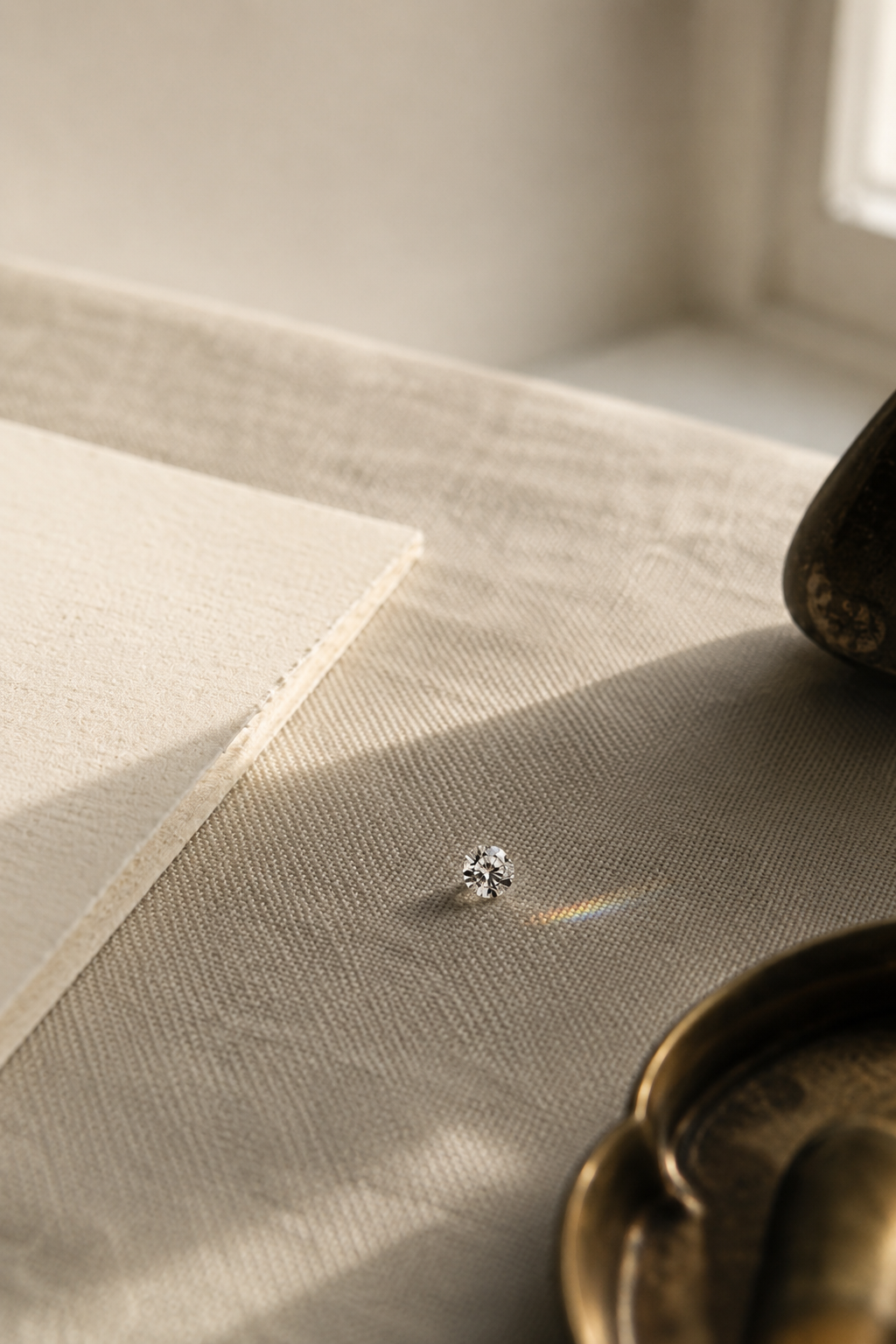
The second is material. Lab-grown diamonds are now indistinguishable from mined diamonds optically and chemically, but cost a fraction of the price. This has changed the economics of fine jewellery completely. A modern mangalsutra can now feature substantial diamond weight, 0.5ct, 1ct, even 2ct, at price points that previous generations would have associated with much smaller stones. The result: more brilliance, more design freedom, more accessibility.
The third is the wearer. Today's bride or wife is more likely to choose her own mangalsutra than ever before. She's pairing it with everyday clothing, layering it with other necklaces, wearing it to work. She wants something that holds the meaning without dictating the outfit. She doesn't want to dress up to wear her mangalsutra. She wants the mangalsutra to fit into her life.
What hasn't changed
It's tempting to frame all of this as "the new replacing the old." That isn't quite right.
The meaning of the mangalsutra hasn't changed. It's still a symbol of marriage. Still a tradition passed down through families. Still a piece given on the wedding day, often with the same vows, in the same ceremony that's been performed for generations. The black beads still carry their original protective symbolism. The thread still represents the bond.
What's changed is how the meaning gets carried. A modern mangalsutra doesn't strip the tradition. It lets the tradition move through new contexts. The same vows, in a new silhouette.
The everyday mangalsutra
The most significant shift in the category is the rise of the everyday mangalsutra, a category that barely existed twenty years ago.
These pieces are designed to be worn daily, not saved for occasions. They're lighter (often 3 to 8 grams of gold), shorter (16 to 18 inches versus the traditional 24 to 32), and finer (delicate chains instead of heavy bead strands). They're often layered with other necklaces. They're worn to work, to the gym, on planes.
Many South Asian women now own two mangalsutras: one heavy traditional piece from the wedding, and one fine daily piece. The traditional one comes out for festivals and family events. The everyday one rarely comes off.
This isn't replacing tradition. It's expanding it. The traditional mangalsutra still does its work for the moments that demand it. The everyday mangalsutra makes the meaning livable.
What to look for in a modern mangalsutra
If you're shopping for a contemporary piece, a few things worth considering:
Metal: 18k solid gold is the standard for fine jewellery. Lower karats contain less gold and are more prone to tarnishing over time, while gold-plated pieces are not long-term jewellery at all, since the plating eventually wears through to the base metal beneath. For a mangalsutra you'll wear every day, 18k strikes the right balance between durability and richness of colour. We compare the options in full in 18k vs 22k gold for a mangalsutra.
Diamonds: Lab-grown diamonds are now standard for modern fine jewellery, and offer significantly better value than mined stones. Look for E-F colour and VS clarity for everyday wear, bright, clean, eye-clean to the naked eye.
Chain length: 16 inches sits at the collarbone. 18 inches drops just below. Most modern pieces offer both, and the choice depends on whether you want it visible above a neckline or peeking from underneath.
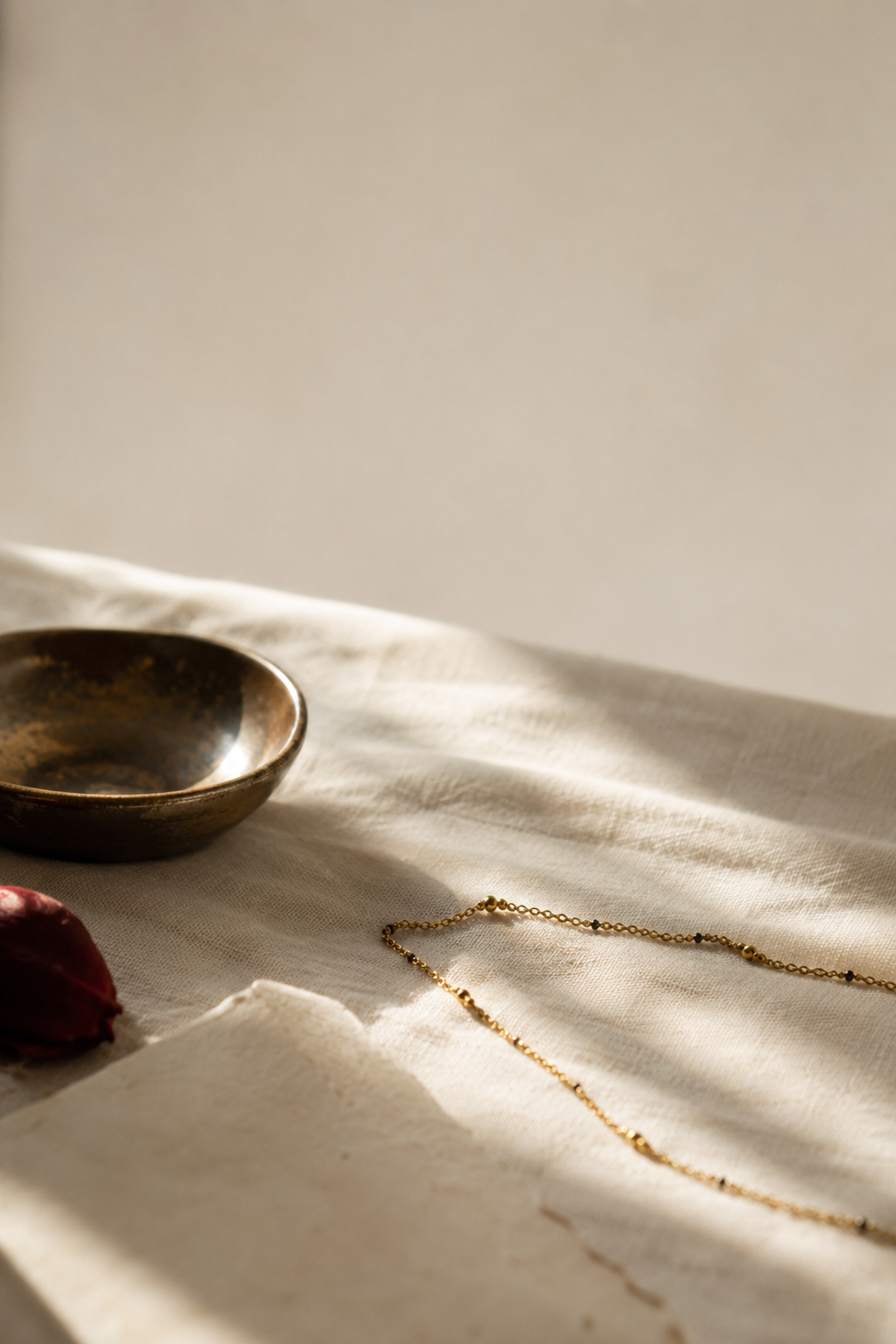
Black beads: These are the non-negotiable element. Without them, it's not a mangalsutra. But modern pieces often use them sparingly, clustered near the clasps, paired between diamonds, or threaded through the chain in subtle ways. The beads should be present without being heavy.
Made for layering: A good modern mangalsutra works with other necklaces. If you can't layer it with a delicate chain or a longer pendant, it's not really designed for daily life.
Where this is going
The mangalsutra category is in the middle of a generational shift. The brands defining it now are reshaping what the category means.
It's no longer just a bridal piece. It's becoming a fine jewellery category in its own right, sitting alongside the engagement ring, the tennis bracelet, the diamond stud. A piece most married South Asian women, and increasingly women in multicultural marriages, own at least one of, often more.
What hasn't changed is why. The mangalsutra still means what it has always meant. It's just learning to live in a new world.
Sutraa makes modern mangalsutras for everyday wear. Explore the collection.