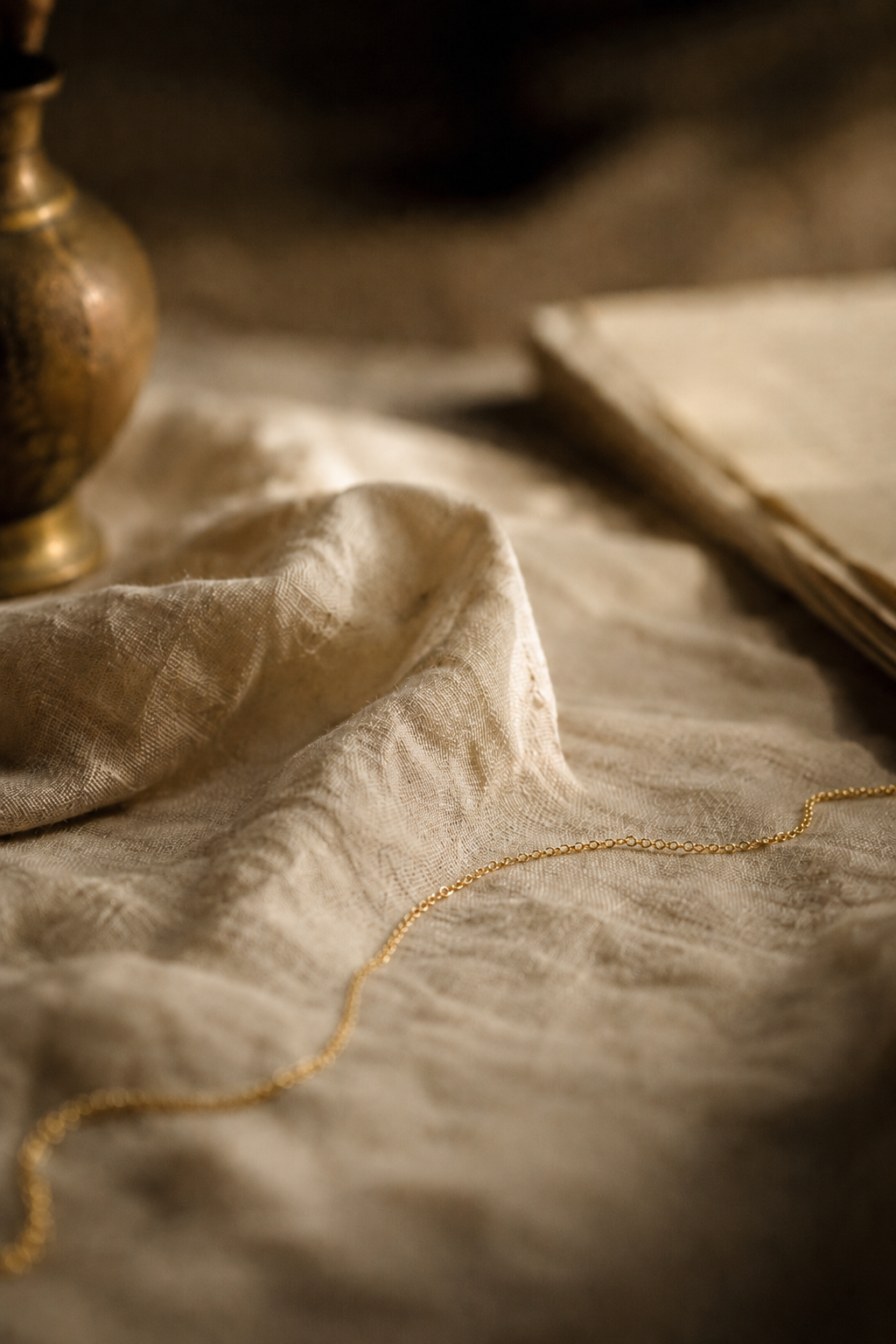
Article: Talking to your family about a modern mangalsutra
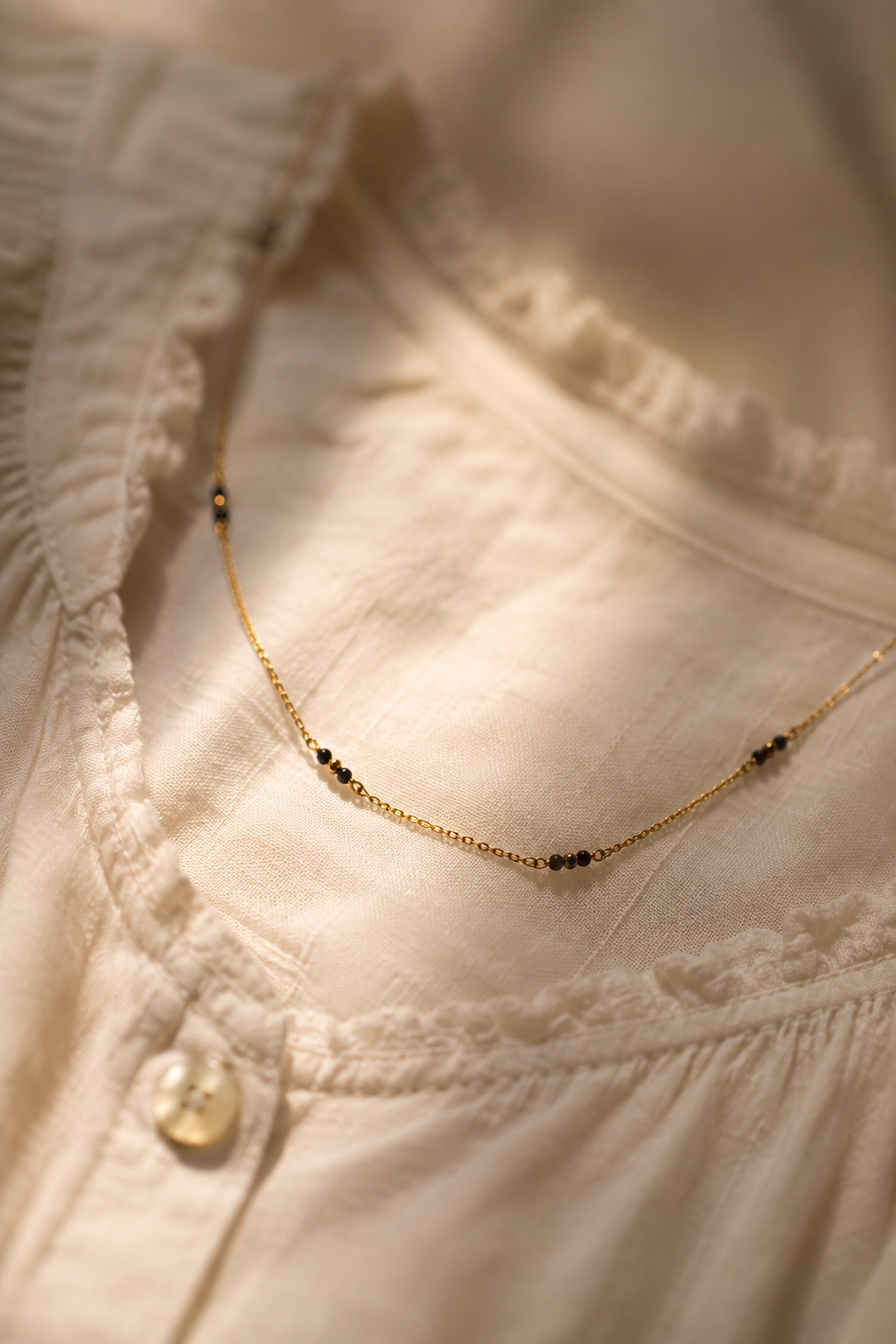
Talking to your family about a modern mangalsutra
A modern mangalsutra doesn't mean leaving the tradition behind
A guide for brides, and for the families who love them. By Rolance, Sutraa Jewels.
Maybe you have already found the mangalsutra you want.
You love it. You can picture yourself wearing it every day. It feels like you.
There is just one problem.
Your mum doesn't think it looks enough like a mangalsutra. Your future mother-in-law imagined something more traditional. Someone has asked where all the gold is, whether there are enough black beads, or why you would choose something different from what the women before you wore.
I understand. And I understand them too.
Because these conversations are almost never really about jewellery.
First, what I am not
I am not the bride, and I am not going to pretend to know how this feels from where you are standing.
I have not grown up with a particular idea of what my mangalsutra would look like. Nobody has told me what I should be wearing on my own body for the next forty years. Nobody has asked me to hold a family's expectations and my own taste at the same time and somehow keep both of them happy.
What I do have is loads of conversations about this topic weekly.
Brides write to us every week. Their mothers write to us. Occasionally their mothers-in-law write to us, which I have learned is a very good sign. And the striking thing is how similar the conversations are. The same worries arrive in the same order, from families who have never met each other, across every part of the diaspora.
So this is not me explaining your experience back to you. It is me telling you what the pattern looks like from the other side of the counter, in the hope that it makes the next conversation easier.
One more thing before I start. I am not going to tell you what a mangalsutra should be. There is no single correct answer. Every family, every region, every sub-sect does this differently, and the version your Nani wore is not more or less right than the version your best friend wore. Anyone who tells you otherwise is selling you something. What follows is what I know about gold, wear and the conversations, not a ruling on tradition.
In our family, the idea came from my mum
Sutraa began when my wife Brenna and I were getting married.
Brenna isn't Indian. Wearing a mangalsutra was something she was choosing to embrace as part of our marriage and my culture, so her experience was different from most of the women we make for.
For a South Asian bride there is usually another layer entirely. You may have grown up knowing exactly what a mangalsutra is supposed to look like. Your mum or your nani may have had a particular style. Your family may have imagined yours long before you started thinking about it yourself, and your in-laws will arrive with their own traditions on top of that.
A lot of meaning sits in that. So do a lot of opinions.
The person most determined that Brenna should have one that actually felt like her, apart from me, was my mum.
She didn't want Brenna wearing something simply because that was what a mangalsutra had always looked like. She wanted us to find one that held the meaning and the tradition, and that Brenna would genuinely love, feel beautiful in, and actually wear.
I couldn't find it. What existed here was made for one day. Beautiful in the way a ceremonial object is beautiful, and completely unsuited to a woman who would put it on for the wedding and take it off on the Monday. The alternative was ordering from photographs from overseas with taxes and duties, and with nobody to ask about it afterwards.
So I had one made instead. That is the whole of how Sutraa started.
I tell that story because my mum represents something that gets lost in these conversations. Tradition and modernity are not opposing sides. You can care deeply about preserving something and still want the person carrying it to feel considered inside it.
You can love a tradition and still want a say in how you carry it
For generations, the women in our families have carried the visible weight of the culture.
Through clothing and jewellery passed down and passed on. The customs kept, the festivals held together, the fasts observed, the symbols of marriage and family worn on the body every single day, in public, where anyone could look and form a view. Men have carried the culture differently. It has rarely been something we had to wear, and almost never something that could be inspected.
Carrying a tradition and having a say in how you carry it have not always been the same thing.
That is not an accusation, and I am not raising it to indict anybody's mother or grandmother. Most of the women who carried it were not offered the choice, and they carried it anyway. That is the only reason there is a tradition here for any of us to be discussing. Everything my generation gets to argue about, we are arguing about because they held it.
But it does mean the request being made now is a genuinely new one, and it is worth recognising it for what it is rather than mistaking it for something else. Someone who wants a mangalsutra that feels more like her is not asking to be released from tradition. She is asking for a say in how it sits on her, which is a thing very few of the women before her were ever offered, and not because they didn't want it.
I think there is room for both.
There is something extraordinary about continuing a tradition that existed long before us. I don't believe preserving its meaning requires every generation of women to wear it in exactly the same way.
A mangalsutra can represent your marriage, your family and your culture, and still look like something you would have chosen for yourself.
Modernising the design doesn't modernise away the meaning. If anything, choosing a piece you genuinely love gives you one more reason to never take it off.
What these conversations are actually about
Here is the most useful thing I have learned.
Brides arrive braced for an argument about whether a modern mangalsutra is acceptable at all. That is the fear going in. It is almost never the discussion.
The actual discussion is practical, and it turns up in roughly the same order every time.
What is it made of. What does it weigh. Will it last. Is the stone real. Are there enough black beads. How does it sit under a shirt.
Those are good questions. They deserve real answers, and a bride who has them is in a far stronger position than one holding a photograph and a hope. A photograph invites an opinion. An answer ends a question.
So here are ours.
Gold weight
Weight is the one that often goes unsaid, and it is usually the one deciding the mood in the room.
In many families, gold at a marriage is not decorative. It is the bride's, it is hers to keep, and for a very long time it was the only thing that reliably was. Prosperity, security, blessing, and something tangible she carried with her into the marriage. That is not sentiment. It is why the question gets asked with more feeling than the others, and why a fine chain can produce a silence that nobody explains.
Better to be plain about it than to hope it doesn't come up.
We build in two registers.
Around three grams. Fine, quiet, worn under a shirt and forgotten about. Most of our pieces sit here. It is the weight that gets worn rather than stored, which matters more than it sounds, because a mangalsutra kept in a drawer is doing none of the work it was made to do.
Closer to five grams. More gold and more presence. The Duet sits here, at just over five grams of 18k. A heavier chain gauge holds its line across the collarbone rather than following it, and it sits over a neckline rather than under one. It reads as substantial the moment somebody picks it up, and it holds its value accordingly.
Two things worth knowing before you choose.
Weight and stone size are separate decisions, and they get confused constantly. A larger diamond does not make a piece heavier in any way a family will register. The gold does that.
And heavier is not automatically better for daily wear. Past a certain point a chain becomes something you are aware of all day, and awareness is what makes people take things off.
If it comes up at home: if the concern is that a bride should receive a meaningful amount of gold, that is a real concern with a real answer. It is a question of which piece, not whether the design is modern.
18k, not 22k
We work in 18k, and this is the answer that surprises families most, so it is worth explaining rather than asserting.
22k is soft. It marks against a desk, it bends, and over time the settings holding stones will move. It was made for a piece that is worn carefully and then put away. That is not a flaw, it is the design brief.
18k is harder. It holds a setting, it takes years of daily wear, and it still looks like itself at the end of them.
There is one honest difference to prepare for. 22k is a deeper, warmer yellow, and if that is the gold your family grew up seeing, 18k can look slightly cool at first sight. Better to know that in advance than to discover it in front of an audience. Held side by side, the difference is visible. Worn on its own, nobody notices after the first week.
If it comes up at home: this is the choice that follows directly from the piece being worn every day. It is not a saving. It is what makes daily wear survivable.
The black beads
The black beads run through every piece we make. That is fixed, and it is the one element we do not vary.
It is also, in practice, the first thing anyone looks for. Not the stone, not the length, not the maker. A piece can be very simple and still be read correctly if the beads are there and properly spaced. A piece can be elaborate and expensive and be read as a necklace if they are not.
If your family has one question, this is usually the answer to it. And if they want more beads, say so. Beads are THE easiest things to change in the whole necklace.
If it comes up at home: hand them the piece. This is a question that answers itself in about two seconds once it is in someone's hands, and much slower over a photograph.
Length
Length matters more for daily wear than most people expect, and it is the decision brides revisit most.
Sixteen inches sits at the base of the throat. It stays above most necklines, so it is visible when you want it visible, and it does not shift around under a collar.
Eighteen inches sits lower, closer to where a traditional piece would fall, and it disappears under a shirt more completely. If it is going to live under clothing every day, this is usually the more comfortable of the two.
There is no correct answer. There is only where you want it to sit. The easiest way to decide is to measure a necklace you already own and wear. Also, if you want more gold, go longer.
Modern doesn't mean less
One of the concerns we hear is that a finer design somehow means less. Less tradition, less substance, less value.
A modern silhouette does not require compromising on the things that matter to you or your family. Every Sutraa piece is made in solid 18k gold, chosen for everyday wear, durability and longevity. These are fine jewellery pieces meant to be lived in now and kept forever.
Not every modern mangalsutra has to be delicate, either. If gold presence is what matters most in your family, there are pieces built for that, and choosing one is not a retreat from the design you love.
It does not have to be one or the other.
You can modify it
Sometimes the answer sits in the middle.
Perhaps you love the design but your family would feel more comfortable with additional black beads. Maybe there is a placement that carries significance for you. Perhaps you want a different length, a change to the stones, or a detail that brings the piece closer to what your family had imagined.
Talk to us. Many of our pieces can be modified, and we are always happy to have the conversation about what is possible.
There is a tendency to treat this as two options: the mangalsutra your family expects, or the modern one you want. There is usually far more room between them than either side realises, and often a small change is all it takes for everyone to feel the thing they care about is still there.
You can also have two
This might be my favourite piece of family diplomacy, and it settles more conversations than anything else in this article.
There is no rule saying one mangalsutra has to do everything.
If your family has dreamed of gifting you a particular piece, there can be something genuinely beautiful about accepting it and preserving everything it represents. And you can still have another.
One is the traditional piece, worn for ceremonies, family occasions and the days when it matters that it is that one. The other becomes part of your everyday jewellery, the one that goes with your work clothes, your favourite dress and the stack you already wear.
Presented as a replacement, a modern mangalsutra can sound like a refusal of something. Presented as the everyday one, it is simply the piece you can live in, and the traditional piece is protected from exactly the wear that would ruin it.
Why choice is the point
If you are going to wear something every day, you should love it.
Not only on your wedding day. Not only in cultural clothing. Not only when family is visiting. For most of the women we make for, this is meant to become part of ordinary life, and ordinary life might mean a saree on Sunday, a white shirt on Monday, activewear on Saturday morning and a dress that evening.
Jewellery worn every day has to move between all of those versions of a person.
Choosing a mangalsutra that feels like you is not a rejection of what it represents. It is choosing the version of that tradition that can actually live alongside the rest of your life.
And what you weigh most is yours to decide. Maybe it is gold. Maybe it is diamonds. Maybe it is having enough black beads that the piece is recognised instantly. Maybe it is a design so easy to wear that you never think twice about whether it works with what you have on. Maybe it is a balance of all of them.
That is precisely why choice matters.
Almost nobody objects to the second version.
If you are having the conversation
A few things that genuinely work.
Ask before you have decided, even when you have decided. The asking is most of it.
Bring the questions rather than the photograph. Weight, gold, length, wear. Those are answerable, and answering them is what moves people. A photograph invites an opinion, and opinions arrive in pairs.
Show two or three, not one. A choice to be made is a very different conversation from a decision to be approved.
Name the everyday part out loud. Say that you intend to wear it every day, for the rest of your life. That single sentence reframes most of the practical questions before they are asked.
Ask your mum or your MIL what hers was like. Who chose it. Whether she liked it at the time. Whether she still wears it. It is a better question than any argument, and the answer is almost always more interesting than you expect.
A note to the husbands
Almost everything above is addressed to the bride. That is the problem with it.
She is usually the one expected to find the piece, choose it, and manage everybody's feelings about it, on top of everything else she is already carrying.
It does not have to sit with her. If the questions are coming from your side of the family, they are yours to answer. Learn what the beads are for. Learn why 18k and not 22k. Learn what it weighs. Be the one who says it out loud, before she has to.
I spent months looking for the right mangalsutra for my wife, and when I could not find it I had it made instead. I am not offering that as a standard anyone needs to meet. I am saying the looking was mine to do, and it is the only reason any of this exists.
We have done the hard part. Getting her the one she actually wants is yours.
And if this was sent to you
If a daughter, a daughter-in-law, a sister or a future bride has sent you this, I want to say something directly to you, because I think you are being spoken about more than spoken to in most of these conversations.
She is not trying to leave the tradition behind. If she were, none of this would be difficult for her, and she would not have gone looking for something that still has the beads in it.
What she is asking for is a say in how she carries it. Which is a smaller request than it sometimes sounds, and a different one from the request people fear they are hearing.
The gold is real, and it is solid. The beads are there. The piece is built to survive being worn every day for decades, which is more than most ceremonial pieces are asked to do. If there is a detail that matters to you and it isn't there, say so, because there is a reasonable chance it can be added.
And if it would settle things to know: my mother asked for this before anyone else did. Not as a compromise. She wanted her daughter-in-law to have something she would love enough to never take off. I have thought about that a lot since, and I think it is the more traditional instinct of the two.
Tradition doesn't disappear because you chose it
I don't think the future of a tradition is found in asking every generation to repeat the last one exactly.
Traditions survive because people keep finding meaning in them. A woman choosing the mangalsutra she wants does not remove the family, the history or the culture behind it. She is still wearing it because of what it represents. She has simply been given a voice in what that representation looks like on her.
That seems worth celebrating.
So if you are the bride reading this while building your case, I hope it helps.
And if this was sent to you by someone who has fallen in love with a modern mangalsutra, I hope it eases your mind a little.
Someone who wants a modern mangalsutra isn't trying to leave the tradition behind. Sutraa was made so that the women who wear it carry tradition with them and really love wearing it while she does.
Love Rolance
Brenna's was the first piece we made. Everything since has come from it, including the ones that look nothing like it.
My mother was right, which I have been reminded of more than once.